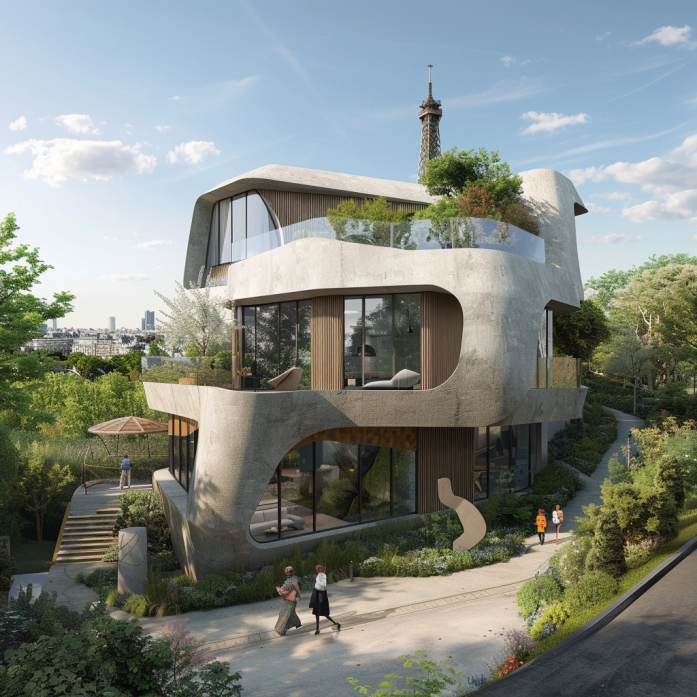
The avant-garde embodies an architecture of hope — hope for change, for improvement, for a more humane way of living together.
How do we design, plan and build in a world of constant transformation? A world that becomes more fractured and uncertain each day? Should we fear this fragmentation? Ignore it and retreat into the ideal of an unchanging architecture? Take refuge in architecture, really?
We reject architectural dogmas: those dogmas that would have us believe that truth and beauty can be attained by following the old rules.
Architecture today: a grammatical fiction, a divine luxury, a crystallised faith, the highest expression of human freedom, imagination and spirit. Yet it must never be reduced to the product sought by technocrats, nor be diminished by a mere pursuit of utility. Architecture intermundium!
Creating according to a predefined model is not art; it is industry. Construction satisfies universal needs; architecture responds to individual ones. Construction uses the means available; architecture can transcend them.
Describing architecture in words is a delicate task, shaped by subjectivity and choice. The design process first demands that all conventions, norms and standards be thrown overboard; otherwise, nothing new can emerge.
Every deviation from structural order, every “impurity”, is perceived as a threat to the values of harmony, unity and stability. The form has been contaminated.
The deconstructivist architect does not dismantle buildings; they identify their hidden cracks and vulnerabilities. They treat the pure forms of architectural tradition as a psychiatrist treats patients: uncovering symptoms of a repressed impurity. This impurity is brought to the surface through a subtle combination of flattery and violence: the form is questioned.